Tree Companies in Smithville Know Trees Usually Give You a Sign
Trees are surprisingly good communicators. Unfortunately for us, they don’t send text messages.
Instead, they communicate through visual clues such as changes in bark, leaves, branches, roots, and growth patterns. A tree may spend months showing subtle signs that something is wrong before a homeowner realizes there is a problem.
Thankfully, experienced tree companies in Smithville know how to recognize those signals. For homeowners, learning a few of the more common warning signs can make it easier to know when a tree simply needs routine care and when it deserves a closer professional look.
Not every odd looking branch means disaster is coming. Still, trees rarely change for no reason.
A Tree That Suddenly Looks Different Deserves Attention
Homeowners become accustomed to the trees surrounding their homes.

You know which one provides shade over the patio. You know which tree drops leaves first every fall. You probably know which branches always seem to scrape the roof when the wind picks up. That familiarity can actually become one of your best tools.
When something suddenly changes, pay attention. Perhaps one portion of the canopy looks thinner than it did last year. Maybe leaves on one branch are turning brown while the rest of the tree remains green. A tree that normally grows vigorously might suddenly produce sparse foliage.
These changes do not automatically mean the tree needs to come down. They simply provide clues that something may be affecting its health. Professional tree companies in Smithville can evaluate the entire tree rather than relying on one isolated symptom.
Dead Branches Are More Than an Appearance Problem
A dead branch tends to stand out once you know what to look for.
It may have no leaves while surrounding branches remain full. Smaller twigs might become brittle. Bark can loosen or disappear entirely.
Deadwood matters because the branch no longer has the flexibility and strength of living wood.
Wind, rain, snow, and ordinary deterioration can eventually cause weakened limbs to break. The location of the branch makes a big difference too.
A dead limb above an unused section of a large property creates a different concern than one hanging above a driveway, roof, walkway, deck, or children’s play area.
Tree care professionals can determine which branches should be removed and how to prune them without damaging healthy portions of the tree.
Cracks Can Tell a Bigger Story
Some tree problems are easy to spot from across the yard. Others require homeowners to look a little closer. Cracks deserve particular attention.
A small surface crack in bark may not represent a major structural issue. A deep split in a trunk or large branch union can be a different matter.
Homeowners should be especially aware of cracks where large limbs meet the trunk. When two heavy branches grow from a narrow connection, pressure increases as both limbs become larger. Weather can place even more stress on that union.
If you notice a crack that appears to be widening, freshly exposed wood, or separation between major sections of a tree, calling one of the experienced tree companies in Smithville is a sensible next step.
Mushrooms Around a Tree Don’t Just Add Whimsy
Mushrooms are a normal part of many landscapes. Finding one near a tree does not automatically mean the tree is trending in fairycore or that it’s dying. However, repeated fungal growth around the base of a trunk or exposed roots deserves attention because certain fungi feed on decaying wood.
The important part is understanding what is happening beneath the surface.
Roots perform two major jobs. They absorb water and nutrients, and they help anchor the tree. When significant root deterioration occurs, a tree can lose structural stability even while the upper canopy continues looking relatively healthy. That is one reason visual appearance alone cannot always reveal the condition of a tree.
Experienced tree professionals look at the complete picture, including trunk condition, roots, canopy health, surrounding soil, and recent changes to the property.
The Ground Around the Tree Matters Too
Sometimes the tree is not the first thing to show signs of trouble. The ground is.
Look around the base after severe weather. Soil that suddenly appears lifted, cracked, or disturbed near the roots could indicate movement.
A tree that seems to have developed a new lean also deserves attention. Some trees naturally grow at an angle and remain perfectly stable for decades. A recently developed lean can mean something very different.
Homeowners should also think about changes that have occurred around the tree. Construction, excavation, new driveways, soil compaction, landscaping projects, or changes in drainage can all affect roots.
Because much of a tree’s support system remains underground, damage is not always immediately visible.
Trees Can Be Too Successful
Not every warning sign involves disease or decay.
Sometimes a healthy tree simply grows into a problem.
Branches may begin stretching across the roof. A canopy can become crowded. Limbs may interfere with structures or grow into areas where they create unnecessary risk.
Trees can also develop competing leaders or poor branch arrangements as they mature.
Corrective pruning at the appropriate time can often improve structure and direct future growth.
Waiting until a large branch becomes a serious problem usually limits the available options.
That is why homeowners should think of tree care as maintenance rather than something reserved for emergencies.
Storms Often Reveal Problems That Were Already There
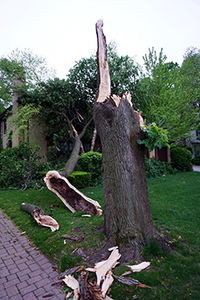
After a strong storm, homeowners understandably notice fallen branches. The storm gets blamed. In many cases, though, weather simply exposes an existing weakness.
Decay, damaged branch unions, deadwood, root problems, and poor structure may exist long before the wind arrives.
Regular tree care gives homeowners an opportunity to identify some of those issues beforehand.
No tree company can guarantee that a tree will never lose a limb during severe weather. Trees are living structures exposed to forces that cannot be controlled. However, reducing obvious weaknesses can improve safety and help homeowners make informed decisions about trees near important areas of the property.
You Can’t Diagnose a Tree From One Symptom
This is where online searches sometimes create unnecessary panic. Type “tree losing bark” into a search engine and you can quickly convince yourself that the entire yard is about to collapse.
Tree health is rarely that simple.
Bark can change for several reasons. Leaves can discolor because of weather, insects, disease, drainage problems, environmental stress, or natural seasonal changes.
Even dead branches can result from several different causes.
Experienced tree companies in Smithville evaluate multiple signs together before making recommendations. The goal should not be to assume the worst. It should be to understand what is actually happening.
Ben Bivins Tree Experts Can Help You Read the Signs
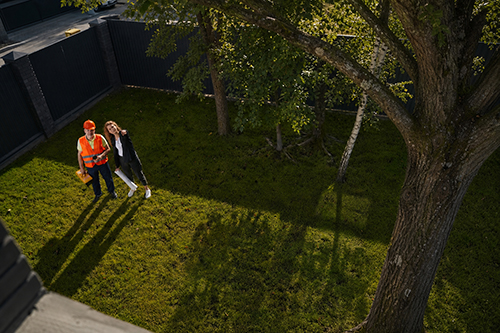
You do not need to become an arborist to keep an eye on the trees around your property. Simply become familiar with what normally looks healthy.
Notice changes in the canopy. Look for broken or dead branches. Pay attention to major cracks, unusual trunk damage, root movement, or trees that suddenly begin leaning.
When something does not look right, get an experienced opinion. Ben Bivins Tree Experts provides professional tree care throughout Smithville and surrounding communities. Their team can evaluate questionable trees, recommend appropriate pruning, address hazardous limbs, perform tree removal when necessary, and help homeowners maintain safer, healthier properties.
The most useful lesson homeowners can learn from tree companies in Smithville is simple: trees often give you clues.
You just have to notice them before they become impossible to ignore.